Vega Sicilia
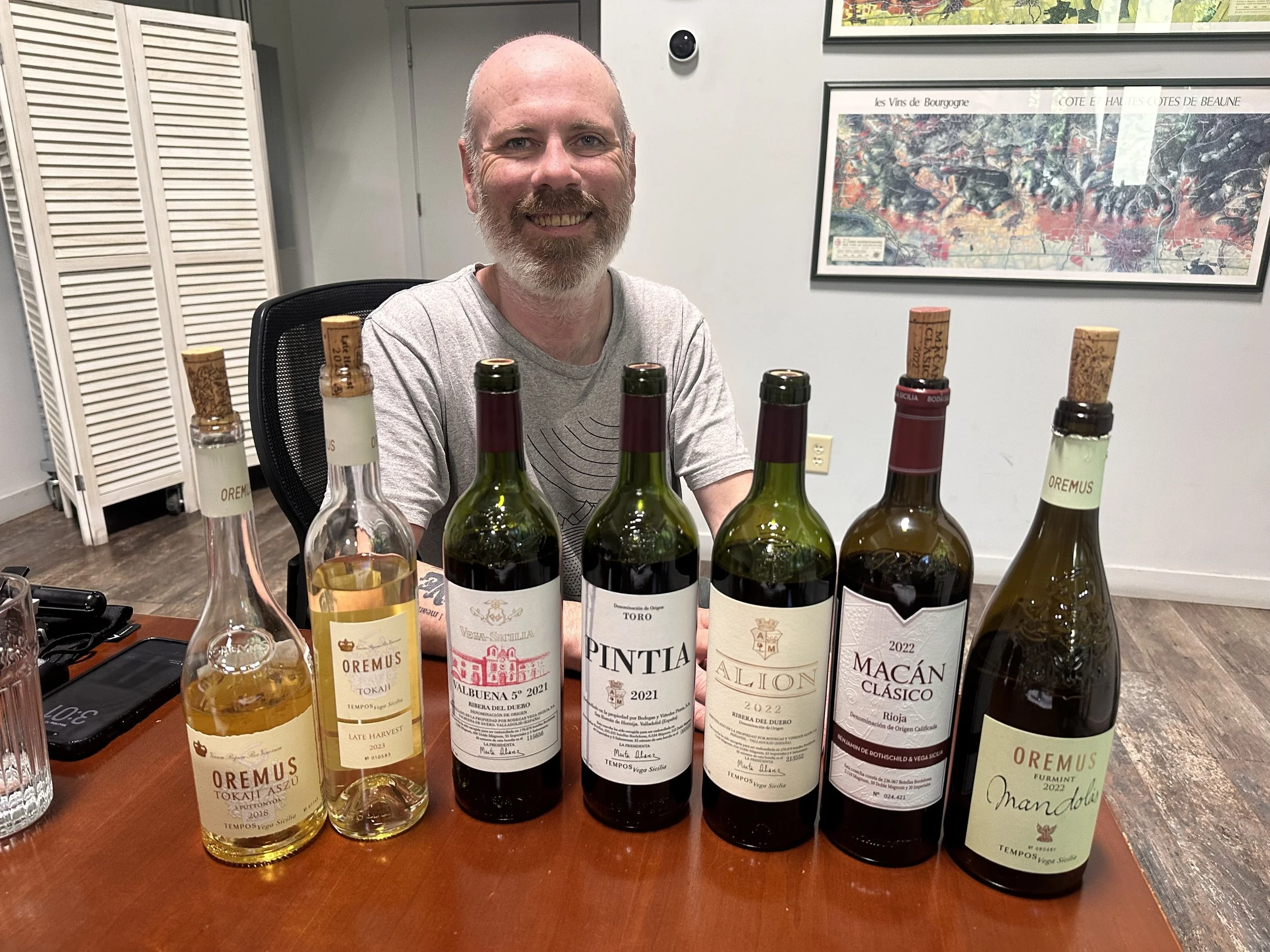
Vega Sicilia are one of the most iconic producers in Spain, and certainly one of the most expensive. It’s therefore a rare treat to taste any of their wines, but always memorable. I was invited by their California importer, Chambers & Chambers, to run through a selection of their wines which served as a wonderful journey across Spain and all the way to Hungary.
a little history
Originally founded in 1864, Vega Sicilia have only been owned by three families; the current owners, the Álvarez family, took over in 1982. Coincidentally, this was the same year the Ribera del Duero DO was created. For much of the twentieth century after phylloxera, Vega Sicilia was the only major winery in the region, otherwise dominated by growers and co-operatives. As Spain emerged from Franco’s rule, regions such as Ribera del Duero were revived, part of a transformation of wine across the country. Vega Sicilia are the standard-bearer for Ribera del Duero but also for Spanish wine in general, with investment in nearby Toro, historic Rioja, and a forthcoming project in Rías Baixas.
oremus (tokaji)
Obviously, a tasting of some of Spain’s greatest wines begins in Hungary. The Álvarez family bought the Oremus property in 1991, not long after the fall of the Soviet empire. From an historical distance, it still seems surprising that a small, if significant, number of producers immediately invested in property in Tokaji. There was good reason: Tokaji had been one of the great sweet wines of Europe for centuries. But by the late 1980s, the wines and the region had long been neglected. One imagines the land was cheap enough to attract producers such as Vega Sicilia to revive such historic wines, but nevertheless quite a commitment to have the ambition to make great sweet wine in uncertain times.
“Oremus” is the name of their Tokaji label. The dry Furmint, called “Mandolás” (“mandolins”) is just wonderful, fermented and aged in a mixture of stainless steel tanks and Hungarian oak barrels. Think of it as a cross of Loire Chenin Blanc and white Burgundy: waxy, nutty, racy, creamy, gripping, serious, delicious, and ageworthy ($50; ✪✪✪✪✪✪). Although dry Furmint from Tokaji has become more widely made and known, it’s the sweet wines the region is most famous for. The Late Harvest ($60; 500ml; ✪✪✪✪✪✪✪) is like a lemon tartelette in a glass, so citrusy and floral, and gorgeous; I’d love to open this with every dessert I make to explore the possibilities of its food pairings. The 5 Puttonyos ($145; 500ml; ✪✪✪✪✪✪) is naturally far richer, to the point it’s hard to taste on its own: it needs food, preferably something warm and Mediterranean. The vintage I tasted was 2018; if I were able to wait that long, I’d open it in 2045.
macán (rioja)
Macán started in 2009 as a collaboration between Vega Sicilia and Benjamin de Rothschild (who died in 2021). The winery is located in the Rioja village of Samaniego, in Rioja Alta, in the foothills of the Cantabrian mountains. Macán Classico ($88; ✪✪✪✪✪✪) is almost all Tempranillo, with a tiny amount of Garnacha, and aged (after fermentation with native yeasts) for ten months in oak barrels, a small amount of which are American, and 25% stainless steel. 2022 was a warm year with an early harvest, and there’s a generous ripeness to the fruit balanced by fine, gently chewy tannins, and a long, graceful finish. A lovely wine to drink now, with plenty of ageing potential.
alión (ribera del duero)
Although the vineyars are also located in Ribera del Duero, Alión was the first project outside the Vega Sicilia label, the first plantings in 1985 and the first vintage 1991. Since 2000, the wine has been made completely separately from the Vega Sicilia facilities. Tasting it immediately after the Rioja (same vintage, same winemaker Gonzalo Iturriaga) showcased the differences between the two regions. Alión is much darker, heavier, and denser, with an intense tannic grip. Alcohol is also slightly higher at 14.5%, compared to 14% for the Rioja. Alión needs a long time to open up to allow the tannins to soften: I’d like to come back in at least ten years. ($170; ✪✪✪✪✪).
pintia (toro)
Toro, which is also on the river Duero along the way to Portugal, is a hot region where elevation is important, otherwise the wines can have too much alcohol. The soils are similar to Châteauneuf-du-Pape, with big river rocks and there’s quite a unique growing climate, with warm air both above and below the vines. There has been a lot of investment in the region, including from Vega Sicilia, which has seen quality rise greatly in the last 30 years, with producers taking advantage of the old bush vines. Tempranillo, locally called Tinto del Toro, is much bigger, deeper, and and fuller than even Ribera del Duero, its rustic character unique to the region. Pintia, the first vintage made in 1995, is consistently a great example of what Toro is capable of in the right hands. Aged for eleven months in 75% new oak, it’s a smooth, smoky, spicy wine, with a subtle power that integrates the 15% ABV. ($130; ✪✪✪✪✪✪).
valbuena 5° (ribera del duero)
The clue is in the name: the vines are grown in a beautiful valley and the wine is always aged for five years, in a combination of old and new, small and large, French and American oak barrels. Vega Sicilia have their own on-site cooperage, and the American oak is sourced exclusively from Ohio, Kentucky, and Illinois. Fermentation is started from a couple of 180-year-old vines, a small but significant contribution to the flavour and structure of the wine. While Alión, Macán, Pintia, and Oremus were created under the ownership of Pablo Álvarez, Valbuena is a continuation of the land and wine that he purchased in 1981. It’s a wine that doesn’t need a description, but simply sit back and savour—if you can afford it or are lucky enough to be around someone who has an open bottle. ($280; ✪✪✪✪✪✪✪).