This blog began as a record of taking the WSET Diploma, during which I studied and explored wines and spirits made all around the world. Having passed the Diploma and become a WSET Certified Educator, the blog has become much more: a continual outlet for my passion for the culture of wine, spirits, and beer.
I aim to educate in an informal, enlightening, and engaging manner. As well as maintaining this blog to track my latest enthusiasms, I provide educational tastings for restaurants and for private groups. Details can be found on the website, and collaborations are welcome.
Wine is my primary interest and area of expertise and this blog aims to immerse the reader in the history of wine, to understand why wine tastes like it does, and to explore all the latest news. At the same time, beer and spirits will never be ignored.
For the drinker, whether casual or professional, today is a good time to be alive.
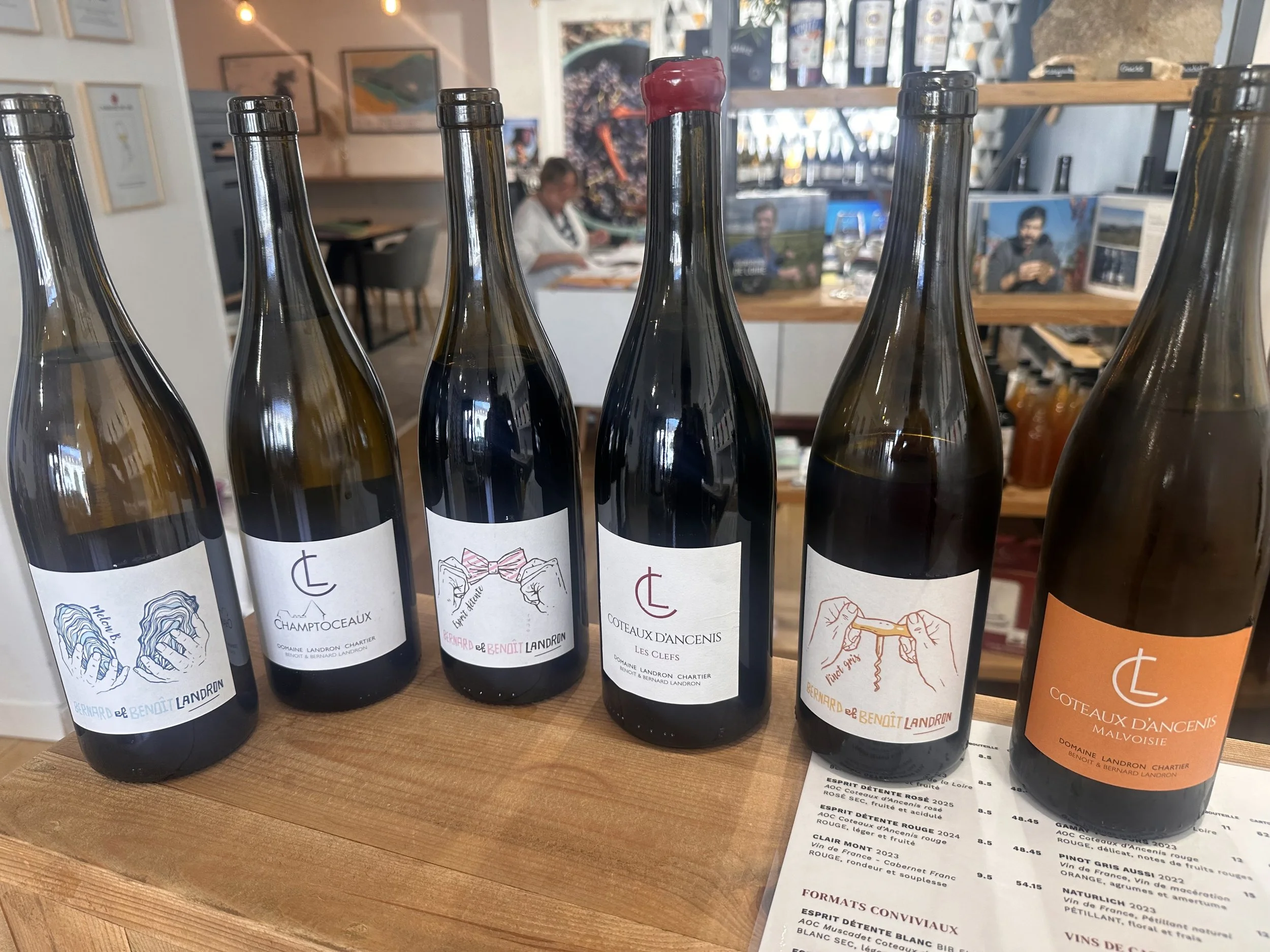
Muscadet is Melon, right? Well, yes—the four Muscadet appellations must be 100% Melon. But the Loire is full of experimental winemakers, so there are other grape varieties planted too though they have to be labelled under as IGP or Vin de France. A brief trip to Nantes saw me sample wines made from Grolleau, Gamay, Pinot Noir, Chardonnay, Savagnin, Pinot Gris, and Folle Blanche. This is a much more dynamic area than outside perceptions suggest.
A trip to Touraine in the Loire Valley showed the wonderful range of wines made there: from Chenin Blanc to Cabernet Franc to Sauvignon Blanc to Gamay to Malbec, dry, off-dry, sweet, and sparkling, rosé too. Despite the long history of winemaking in the Loire, the region has seen a lot of changes in the last few decades. Here’s a spotlight on some of the major Touraine appellations and producers to try.
Gouais Blanc is a little-planted white grape variety that in the past has been banned in France. It produces indeterminate, high-acid wines, but is indirectly responsible for some of the greatest wine in the world. Through natural crossings, it's the parent of Chardonnay, Aligoté, and Gamay in Burgundy/Beaujolais, as well as Riesling, Furmint, and Blaufränkisch. Without Gouais Blanc, wine as we know it wouldn't exist, nor would our understanding of DNA and grape genetics.
An overview of Montagne de Reims, a region to the north of Champagne which is most famous for its Grand Cru Pinot Noir, but there’s also Chardonnay and Meunier planted, and styles vary according to the village and to the producer. A facsinating example of how terroir is more important to Champagne than is sometimes discussed.
Loire’s dry wines from Chenin Blanc are currently quite fashionable for their high acid, linear, food-friendly style—but that wasn’t always the case. The last 30 years have seen a lot of changes to increase quality: better picking times, less sulphur, longer ageing to make more precise, expressive wines. Understanding Loire Chenin Blanc helps us truly appreciate the style and the quality.
St-Joseph is a—too—large northern Rhône appellation, which makes understanding it difficult. Historically, the best wines came from the southern part, and that’s arguably still the case now. There’s also a determination to make the boundaries more focused. Increasingly, there is excellent white wine being made too. Overall, St-Joseph is overgoing a welcome upswing in quality and consistency.
The Southern Rhône is most famous for Châteauneuf-du-Pape, but there are many other wines with localised influences. Gigondas and Ventoux are affected by the cooling Dentelles de Montmarail mountains; Tavel produces fuller-bodied rosé with perhaps more experimentation than is supposed; and there are the smaller, lesser-known villages which provide particularly good value alternatives.
Châteauneuf-du-Pape is one of the most famous names in French wine, producing a full-bodied style of wine most consumers are familiar with. However, the wines are much more diverse than its reputation suggests, with varied soil types, many grape varieties, aspect influences, weather patterns, and producer choices all influencing the final style of wine. A quick visit to the appellation showed that Châteauneuf-du-Pape has a lot of surprises to offer.
La Cité du Vin was opened in 2016, and is worth visiting Bordeaux in its own right. Last week was the second time I’ve been there and it’s well worth repeatedly visiting: after all, I got a glass of Bulgarian sparkling wine at the end, with views over Bordeaux as I sipped. What’s not to love?
St-Emilion and Pomerol neighbour each other and are always Merlot dominant, but there are lots of differences within the regions: soils, viticultural practices, aspect, quality, and the prices of the wines. Two prestigious regions which are hard to pin down.
A brief trip to Haut-Médoc to learn about the growing conditions, the effects of climate change, the styles of wine, and the effect of the Garonne river and Gironde estuary on the four famous villages of St-Estèphe, Paulliac, St-Julien, and Margaux.
Sauternes is a famous region for sweet wine in the south of Bordeaux. On a brief visit there, I learnt all about the importance of climate, inconsistent weather, and rivers, how noble rot develops, and how the wines of Sauternes are made. And I got to visit Château d’Yquem!
Languedoc: a vast region that’s difficult to wrap one’s head around. But a brief trip to Pic-St-Loup and St-Chinian gave an insight into the high-quality potential that small producers are capable of fulfilling.
The Rhône is best known for its red wines, but there’s a fair amount of white wine made too, varying in style and price point: rich and aromatic to fresh and easy-drinking. That diversity makes white Rhône well worth exploring.
Has Beaujolais finally shrugged off its Nouveau image? The wines are now considered as serious and distinctive, with their own identity. So it’s time to revisit the region and consider what makes Beaujolais so unique.
Cahors is the traditional heartlaand of Malbec, and is the only appellation in France dedicated to the variety. Due to the success of Malbec in Argentina, there’s a renewed sense of purpose in Cahors with an astonishing range of styles made from just the one variety but from many different soil types and aspects. After meeting a number of producers, I came away with the impression of a dynamic, ever-changing region.
Vin Doux Naturel is one of the great, historic styles of fortified wine, made all over the south of France. It’s not a fashionable or well-known style, but it’s been made for centuries and is full of history. There is an incredible range of wines made, from fresh and fruity to oxidative and mature, making it extraordinarily versatile. I got to taste the wines of several producers—including a wine from 1895, which made the 1959 look young…
It can be difficult to find good Bordeaux that’s also affordable. Cru Bourgeois is a category which offers approachable, good-value Cabernet Sauvignon based wines. Read more to find out about these alternatives to expensive Left Bank wines.