Yet More Italian Grape Varieties
The world of Italian wine never ends. There are so many grape varieties, obscure and associated with DOCs unknown outside their region, always something new to learn about. Welcome to the fun, chaotic, historic nature of Italy.
Having just attended a tasting of Italian wines hosted by US importer, Bon Vivant, here is an overview of the grape varieties I had barely—or never—heard of.
Colorino
Colorino is a black grape variety used to bring colour—hence its name—to Tuscan blends. For that reason, it used to be planted more than it is now. Colour was associated with quality, and Sangiovese, with which it is blended, can be quite pale in appearance. Colour and quality are no longer so strongly linked, and better grape-growing and winemaking techniques mean that Sangiovese isn’t as dilute as lesser wines once could have been. It’s still an historic variety within Tuscany, and continues to play an occasional role in blends.
Agri Segretum
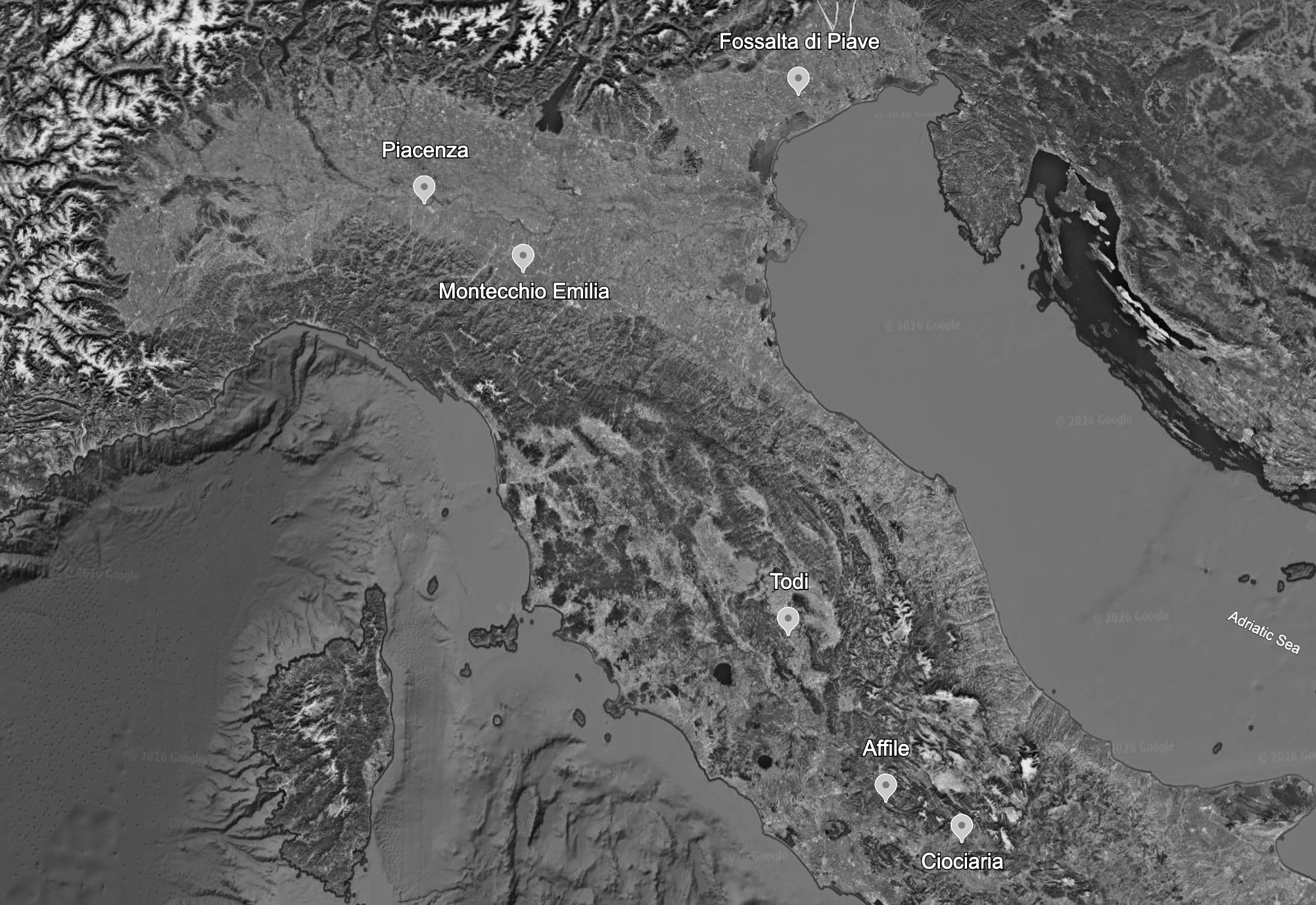
Located in Umbria along the river Tiber. I tried two Sangiovese-based wines that featured Colorino alongside Malvasia Nera. Ironically, given the purpose of Colorino, “Freghino” (in a 1L bottle) was pale-coloured, light, and very drinkable. “Pottarello,” which comes from the Todi DOC (formed only in 2021) was more Sangiovese heavy, with 10% Colorino and 10% Malvasia Nera for a more substantial, full-bodied red wine.
Cesanese, Passerina, Olivella Nera, Bellone
Lazio is a wine region that gets overlooked, perhaps surprisingly as it’s the province which Rome is in and it’s the name of one of the city’s two biggest football teams and because winemaking goes back to Roman times. There are international varieties planted in the region (Merlot works especially well), but there are also plenty of varieties local to the region.
Cesanese is known—if at all—for serious red wines. There are three DOC(G)s: Cesanese di Affile, Cesanese di Olevano Romano, and Cesanese del Piglio. Another black grape is Olivella Nera, which is also called Sciascinoso. It comes from Campania, but is also found in Lazio. It generally produces light-bodied red wines, which is why it’s often used in blends to soften Aglianico.
Lazio has somehow become more known for its white wines, even if the red wines are often the best. A lot of those white wines are fresh and easy, drunk in Rome. But there are some more interesting examples from historic varieties. Passerina is a variety planted in small amounts across central Italy; sweet and sparkling wines are produced, dry styles have a bitter, tart taste. Bellone is a white variety local to Lazio, used mostly for blending, which produces a range of styles, sometimes with a little sweetness to them.
Casale della Ioria
Based in Ciociaria, Lazio. Founded in 1921, they were fundamental to the foundation of the Cesanese del Piglio DOCG. I tasted four wines, all from the local varieties. The “Colle Bianco” is from Passerina, and has a great, drying texture along with green apple aromas: really like biting into a freshly picked apple. The “Espero” Olivella Nera is a pale-coloured wine whose light appearance belies its firm tannic structure. And there are two Cesanese wines: “Campo Novo” is lighter and more approachable in comparison to the more serious, tannic varietally-labelled Cesanese which is aged for twelve months in used oak barrels.
Ortrugo
A variety which had nearly disappeared until plantings were revived from the 1960s onwards. It’s mainly found in Colli Piacenti DOC around the city of Piacenza in north-west Emilia-Romagna, midway between Parma and Milan. It’s often used for sparkling wine, or in a blend with Malvasia di Candia Aromatica (the most aromatic of the Malvasia family of varieties).
Santa Giustina
Sparkling wines from Ortrugo are often frizzante, light and fresh, perfect for warm summer afternoons. Santa Giustina have a 100ha property that has trees, crops, a game reserve, and 30ha of vineyards planted to local varieties. “Vivace,” their sparkling Ortrugo, is a lot of fun and takes you to a hilltop village in the Italian countryside. They also make a red frizzante, made from Barbera and Bonarda (not the same as the Argentinian Bonarda).
Raboso
Typically for Italy, Raboso is a confusing variety as there are two distinct versions: Raboso Piave and Raboso Veronese. Both are found in Veneto and are often mistaken as they are quite similar (and planted together), though the Veronese is more tannic and also much less commonly found. Raboso Piave used to be known for its astringent tannins, but that was in part because of picking the grapes too early. Now, it’s used to make a range of wines: deep-coloured and tannic, lighter-bodied reds, rosé, even sparkling, and Amarone-style wines. There’s just over 1,000ha planted: rare but not impossible to find varietal bottlings.
The De Stefani family, who have been making wine since the late 1800s, have several brands, including Redentore. They are based in Fossalta di Piave, near the Adriatic Sea, although the family first started making wine in the village of Refrontolo which is in between Valdobbiadene and Conegliano—which is why they continue to make Prosecco (including Col Fondo). The Raboso has fine tannins, a spicy mouthfeel, and crunchy red fruits. The packaging for the wines is distinctive and striking.
Picol Ross, Malbo Gentile, Maestri
Lambrusco is an extremely confusing region, because there are so many varieties called Lambrusco. To add to the confusion, there are other obscure varieties which find themselves in blends or even on their own. Malbo Gentile is only found in Emilia-Romagna (around 100ha), particularly on hillsides around Modena. When it’s in a blend, it adds colour and body. Lambrusco Maestri originates from around Parma (maybe from the village of Villa Maestri) and can be used in blends in Lambrusco Mantovano DOC and sometimes is made as a varietal wine under the Lambrusco dell’Emilia IGT for deep-coloured, old-fashioned wines. Picol Ross is even more obscure but an historic variety; as far as I know the Picol Ross I tried is the only one in existence.
Tenuta la Piccola
Specialising in Lambrusco, I tried two examples. The Picol Ross cried out for cured meat; dry and meaty, so typical of Lambrusco even if the variety is so rare. “Nero di Cio” is a blend of Malbo Gentile, Maestri, and Salamino (a more common Lambrusco variety), a little fruitier and rounder. In general, Lambrusco is best enjoyed with food and tasting these wines was a reminder that Lambrusco should not be dismissed as a weird lightly sparkling red wine.
Italian wine: always a reminder of the diverse nature of this boot-shaped country.