Muscadet that isn’t muscadet
Muscadet is synonymous with the Melon grape variety, also called Melon Blanc or Melon de Bourgogne (where a tiny amount is still grown). I say synonymous; in fact, any wine labelled Muscadet has to be made solely from Melon. There are four different appellations, all located around the Atlantic city of Nantes and the Loire river, the most famous and widely-found being Muscadet Sèvre-et-Maine. However, on a brief trip to Nantes I learnt that there is a lot more to the region than just Melon, with other varieties planted, though they have to be sold under either the IGP or Vin de France designations. Like Muscadet, the wines are high acid, low alcohol, and food orientated, in line with many current trends.
grolleau
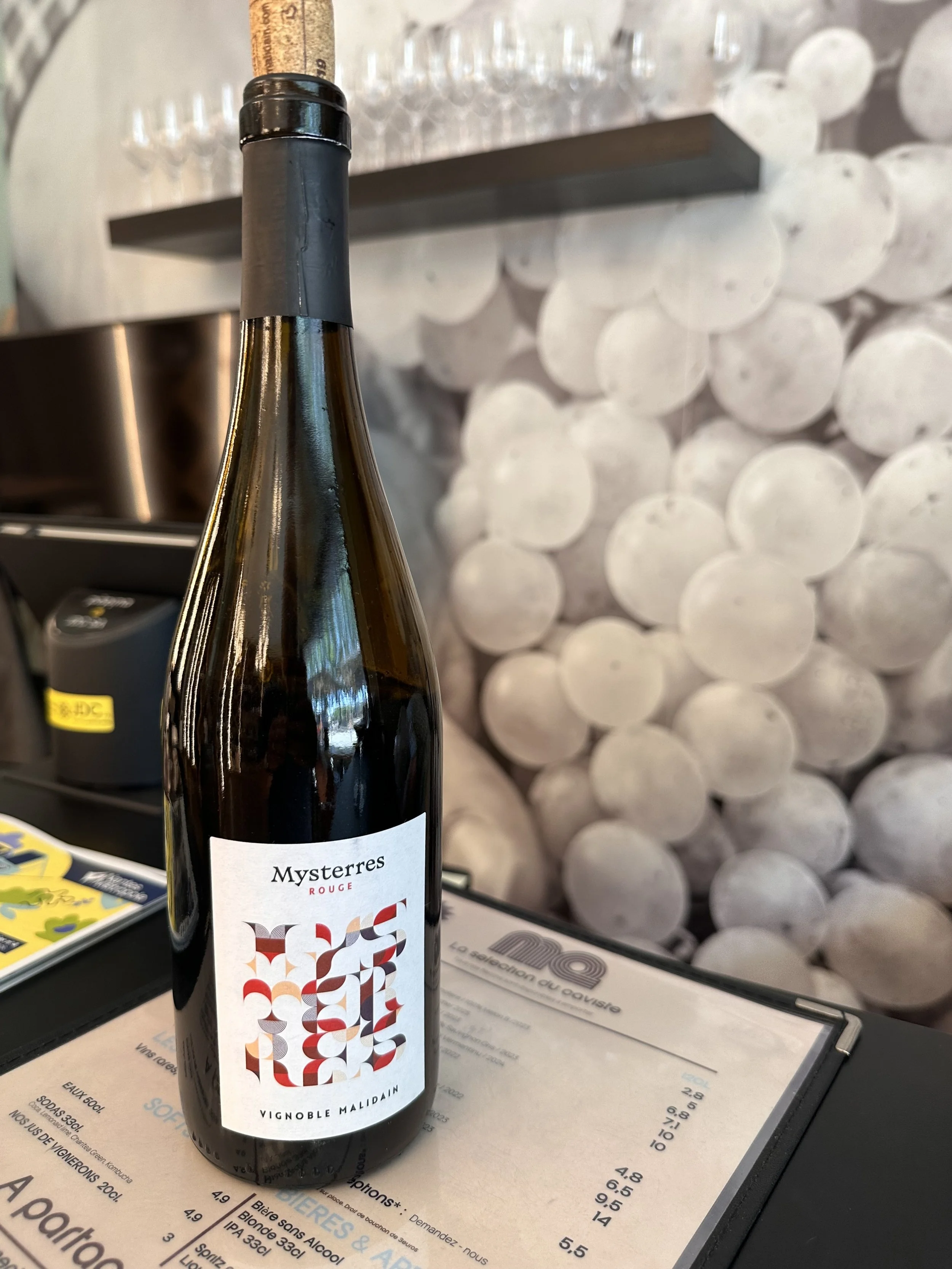
A high-yielding black variety most often grown for basic rosé, producers across the Loire have begun to take Grolleau much more seriously. When yields are limited and the grapes allowed to ripen longer, the wines have a light tannin texture and a crunchy fruitiness, a bit like a cool climate Grenache. “Mysterres” by Malidain is a perfect example, with alcohol of just 11.5%, high acid, gentle but firm tannins, and just ripe red fruit aromas.
pinot noir
Pinot Noir is grown across the Loire, often for rosé as well as red wine. Given it likes a cooler climate, it’s perhaps no surprise it’s found in the Muscadet region as well as Fiefs Vendéens just further south. Perhaps it’s just a little too cool, though, as the Pinot by Cognettes was tasty but a little too thin. Me, I’d be making bubbles from Pinot Noir.
gamay
Like Pinot Noir, Gamay is much more associated with a region outside the Loire Valley. But it’s found all over for a range of styles, and here it is in Muscadet too, again producing lighter-bodied wines. “Nuances et le point de l’orgue” by Victor Cossy is a musically-themed wine, its name describing its character perfectly: nuances rising to a crescendo. It’s a summer red, best served chilled, with various food pairing opportunities from seafood to barbecue.
folle blanche
The mad white grape so difficult to grow there’s not that much planted across France. There’s a little bit in Armagnac for brandy production, but the Muscadet region is one of the few other places it’s also found (there’s a separate appellation close to the Atlantic, Gros Plant de Nantais). Acid is searingly high, which is why it works for brandy. Tasting “Colère” by Château Carré (the label for this wine is Vices & Vertus) on its own was difficult due to all that acidity, but I can imagine it coming into its own with seafood which is so popular locally.
muscadet-coteaux de la loire & coteaux d’ancenis
These are two appellations which roughly overlap each other on the northern banks of the Loire, one for white wine, the other for red. But even within these two appellations, there’s also experimentation with unofficial varieties.
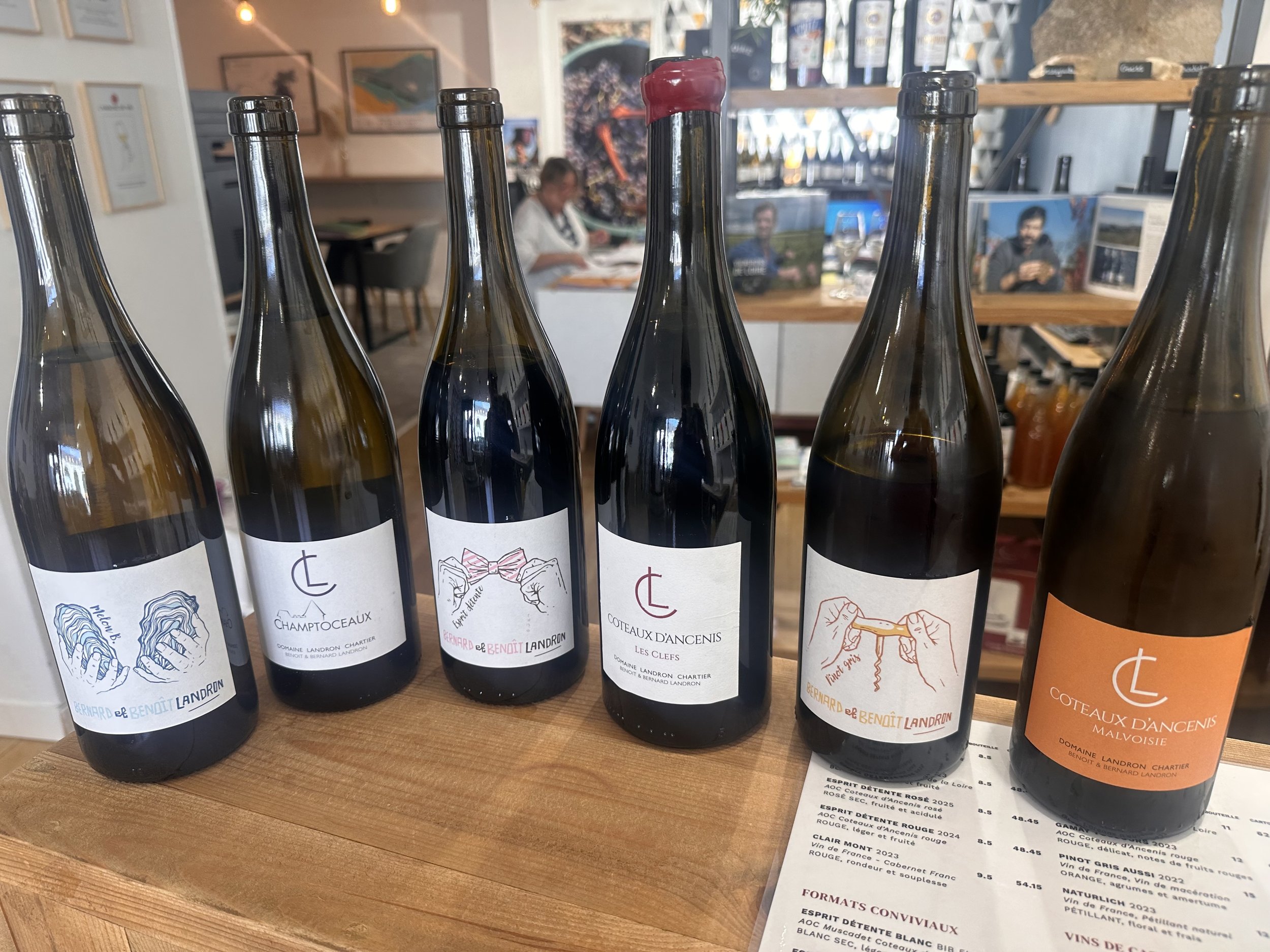
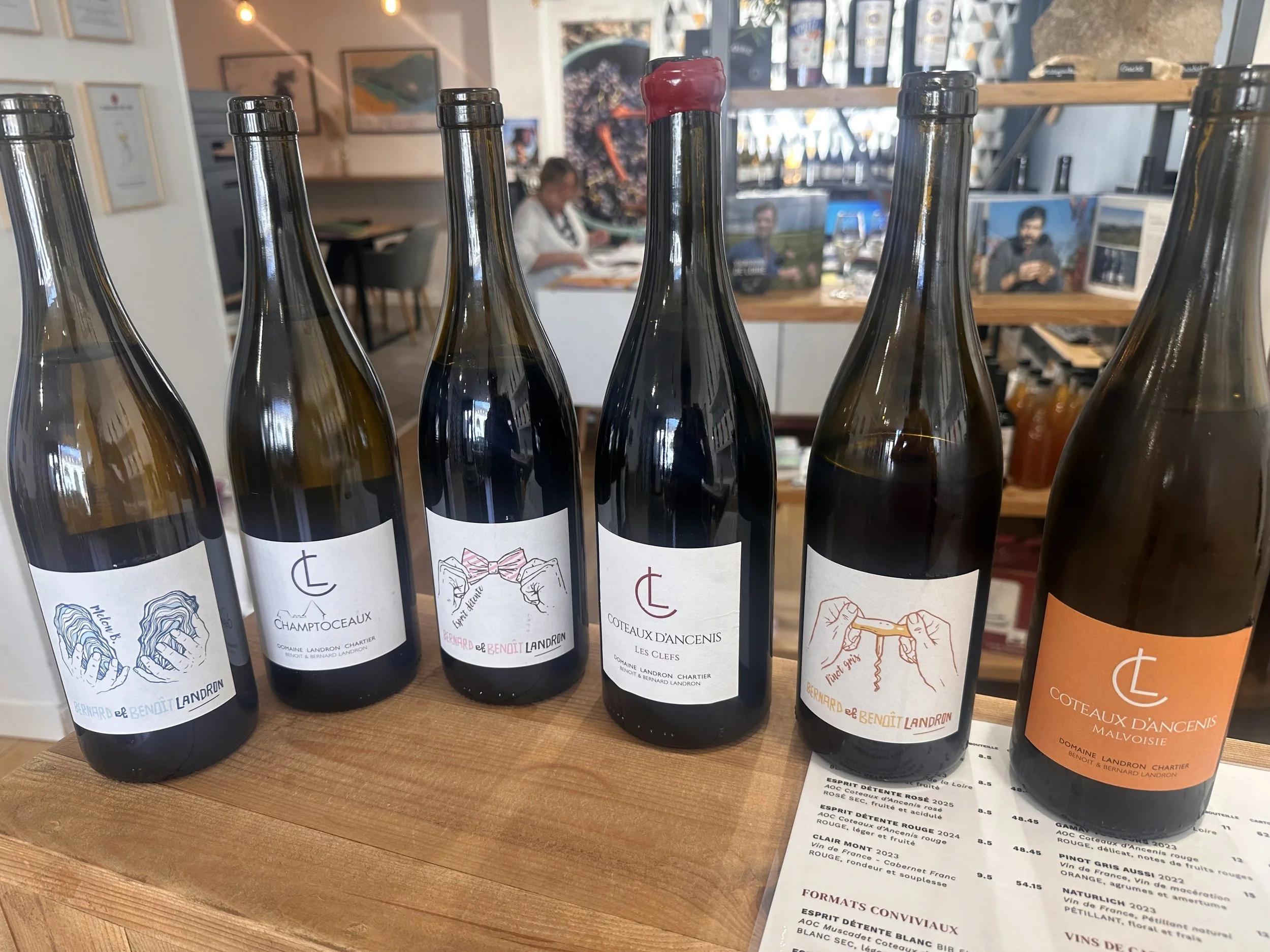
In all of the Muscadet appellations, there is an emphasis by quality producers on the varied soil types. Landron-Chartier make an appellation blend, “Melon B,” which is fresh and approachable, as well as several single-vineyard wines. I tasted Champtoceaux, the only cru communaux outside Sèvre-et-Maine, much richer and more powerful than their regular Muscadet, proof that very interesting, ageable wine can be made from Melon.
Landron-Chartier make wine from other varieties too. There is an off-dry Pinot Gris—locally called Malvoisie—not dissimilar to Alsace, though sweeter in order to balance the racy acidity. As an alternative, they also make a skin-contact Pinot Gris which is a vibrant orange in colour, almost a rosé on first glance. Despite the skin contact, the tannins are light and well-integrated, giving structure to a lightly fruity, smoky style.
Coteaux d’Ancenis is for red wine only, in the centre of the Muscadet-Coteaux de la Loire appellation, with Gamay the main variety. The approach of Landron-Chartier is similar to their Muscadet: an appellation blend called “Esprit Détente” and a single-vineyard wine, Les Clefs. Think of them as the equivalent of Beaujolais-Villages and Cru Beaujolais. Les Clefs in particular is gorgeous, everything I love about Gamay. These two appellations really should be better known.
chardonnay & savagnin
Savagnin is the mother of all grape varieties, with so many descendants. It’s now mostly connected with fashionable Jura, but here it is in the Loire. “La Justice” by Jérome Bretaudeau, a blend of 20% Savagnin and 80% Chardonnay, aged in amphorae, was the highlight of the trip: rich, powerful, nuanced, fresh, with so much depth. Any fan of the Jura would adore this wine. I drank it with duck; not a natural pairing, but the wine’s structure made it a perfect complement. You know his wines are good when he doesn’t even bother with a website….
When visiting France, and particularly the Loire, seek out the unusual because the best producers don’t follow the rules by rote. They make their own instead.