Following the Variety: Bordeaux
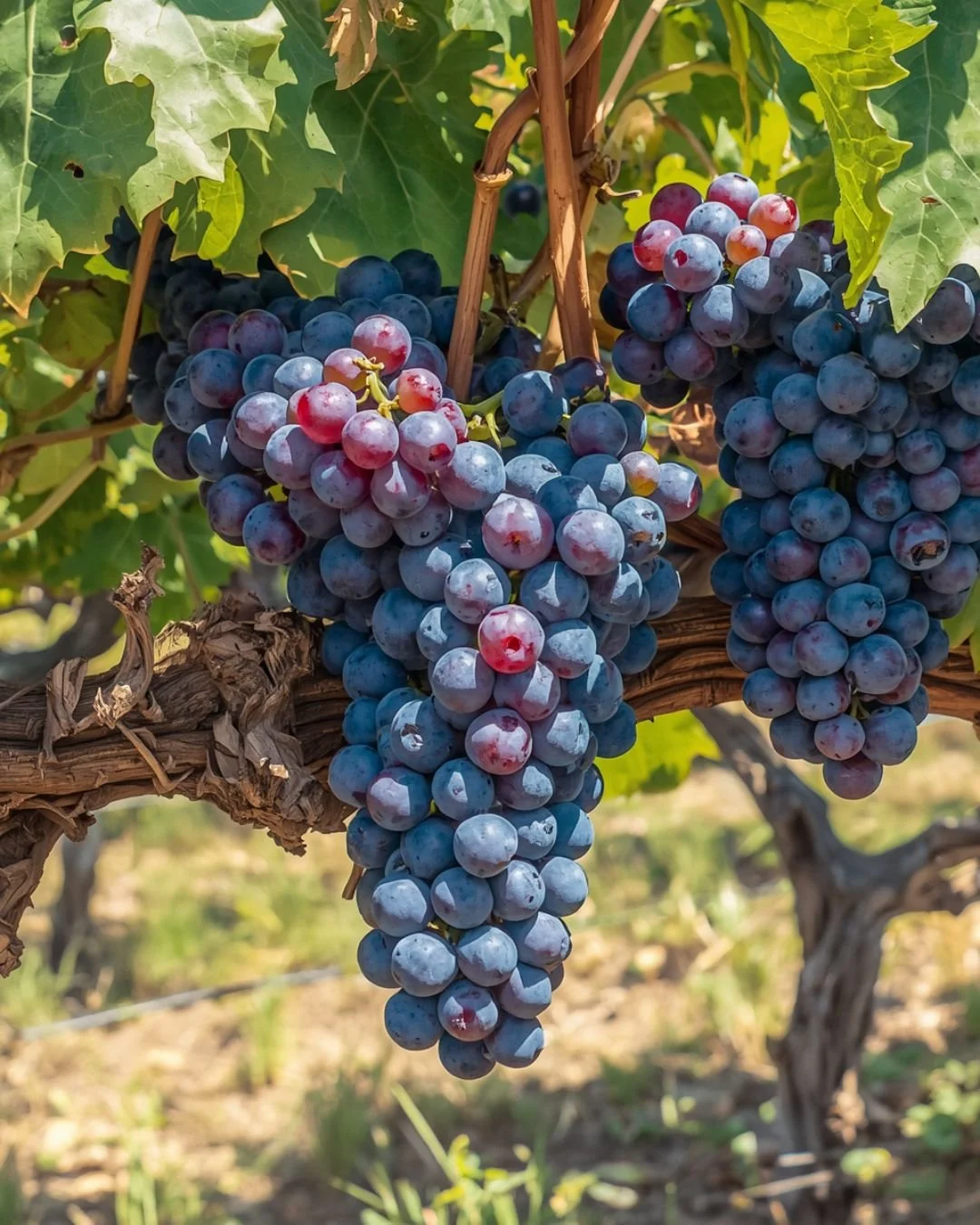
Varieties associated with Bordeaux, whether they originate from there or not, are planted across the world. These are important and significant varieties, not just for Bordeaux but also regions in France, Italy, the USA, South America, South Africa, Australia, and New Zealand. It’s impossible to imagine the world of wine without them. The latest series of “Following the Variety” has concluded by looking at all these Bordeaux varieties, where they’re grown, and what the wines taste like.
merlot
The most planted variety in Bordeaux, Merlot has a bad rep. There are lots of reasons for this: a lot of red Bordeaux, mostly made from Merlot, is of basic quality. Likewise in California, where only a small number of producers take Merlot seriously. But some of the greatest wine in the world is made from Merlot, for instance in St-Emilion and particularly Pomerol. So why the negativity around Merlot?
In 1991, the CBS 60 Minutes series made an episode in protest against the neo-Prohibitionist movement in the USA. The episode was called “The French Paradox,” asking why the French lived so long when they drank so much wine and ate so much fatty food. It was extremely popular and Merlot, because it’s the most planted variety in France, soared. The problem was that consumers weren’t buying the wines for taste, but for (dubious) health reasons. Although there was some great Merlot being made, much of it was cheap and low quality. The perception of wines from Merlot not being very good reached a climax in Sideways, in which Miles says “I’m not drinking that fucking shit!” He also drinks Cheval Blanc at the end of the film, an iconic wine which is at least 50% Merlot. The irony was lost on most viewers.
cabernet sauvignon
Miles also says in Sideways that Cabernet Sauvignon is the most boring variety in the world because anyone can make great wine from it. Unlike most of the things Miles says in the film, I’m inclined to agree with him, but that’s might be because I worked in Napa Valley for so long. It is, of course, one of the greatest varieties for red wine, but also more complicated than is often supposed. It ripens late, which is why the earlier-ripening Merlot and Cabernet Franc are so important: Bordeaux is never 100% Cabernet Sauvignon. Blends are important in Bordeaux’s wet climate, and these blends are imitated in warmer regions where they’re not actually necessary. Cabernet Sauvignon reflects the climate in which it’s grown, but it also reflects winemaking choices: the blend, the vessels used for maturation, and also when the grapes are picked. There’s a big difference between a Napa Cab of 13% ABV and one of 15%.
cabernet franc
In Bordeaux, Cabernet Franc is used as a blending component to soften either Cabernet Sauvignon or Merlot, but it also plays a significant role in taste, texture, and complexity which varies from producer to producer. It likes both gravel and limestone soils, also making it very useful within Bordeaux. Cabernet Franc is also extremely important in the Loire Valley, particularly in Anjou-Saumur and Touraine, where a wide range of styles is made: light and fruity, serious and ageworthy, rosé, and sparkling. Outside of France, plantings are usually for Bordeaux blends though there are producers who make excellent single-varietal wines whose style depends on whether they’re influenced by Bordeaux or by the Loire.
malbec
Like Cabernet Franc, Malbec isn’t technically a Bordeaux variety as it originates from Cahors in south-west France, brought to Bordeaux in the late 1700s. Cahors is an historic region, referred to by the English in the 1300s as “the black wine” because of its colour. The fame of Malbec now comes from Mendoza in Argentina, which in turn has helped revive Cahors in France. As a result, plantings in Bordeaux have slowly increased though it’s still mainly used as a blending component. Malbec produces tannic, spicy, floral wines in a variety of styles, from fruity and youthful to ageworthy wines matured in new French oak.
carménère
There’s very little planted in Bordeaux, although this is where the variety comes from. Instead, it’s best known in Chile, where it’s seen as the signature variety, the equivalent of Malbec in Argentina. There are two problems, however: there’s still confusion on what’s Carménère and what’s Merlot; and it’s difficult to make great wine from the variety. It can be green and herbaceous, like an underripe Cabernet Sauvignon. Strangely, there’s over 1,000ha planted in China, where it’s called Cabernet Gernischt—compared to the 21ha in its homeland of Bordeaux.
petit verdot
“A little bit goes a long way” is how many winemakers describe Petit Verdot. It’s a full-bodied, deep-coloured, highly tannic grape variety which can bulk up Bordeaux blends. In Bordeaux, this would be useful in weaker vintages—except Petit Verdot is a late-ripening variety that only works in the best vintages when it’s not really necessary. Hence, there are fewer than 500ha planted in Bordeaux. But it’s used in international Bordeaux blends, particularly in Napa Valley where it’s valued for the extra heft it brings to the wines. There's also some single-varietal wines made in Napa, which are like Napa on steroids.
white grapes
Until 1970, there was more white wine made in Bordeaux than red wine and Sémillon was the most planted variety. That’s changed drastically: now 90% of all wine in Bordeaux is red. But the historic importance of white wine in Bordeaux is being revisited. Sauvignon Blanc plantings are on the rise, due to its international popularity. Many of these wines are quite generic, but Sauvignon Blanc is also used in blends with Sémillon, adding freshness and herbaceousness to the weight of Sémillon. This is seen in the great sweet wines of Sauternes and the dry wines of Pessac-Léognan, the latter style replicated in regions such as Napa, Stellenbosch, and Margaret River.
Then there’s the unique style of Hunter Valley, a sub-tropical region north of Sydney. Semillon is picked early due to the continental storms that blow in during harvest. The grapes are high in acid, low in sugar, with few aromatics. Yet with bottle age, the wines develop complex, powerful, smoky, honeyed aromas. There really is no wine quite like Hunter Valley Semillon.
Bordeaux varieties have influenced so many regions around the world, creating many different styles of wine. Their diversity also reflects the range of wines made within Bordeaux itself.
To find out even more about these varieties, go to patreon.com/mattswineworld for six in-depth episodes focused on the varieties and the regions in which they are grown.